
KNOWLEDGE · LED bulb base types
E26 vs E27 vs B22 vs E14: LED Bulb Base Guide
Choose an LED bulb base by the actual socket, not by the destination country's name alone. E26 and E27 are similar screw formats but should be specified separately; B22 is a bayonet base and E14 is a smaller screw base. GU10 and MR16 need their own electrical and fixture checks.Local preview · November 12, 2026 · Shieldaily Editorial Team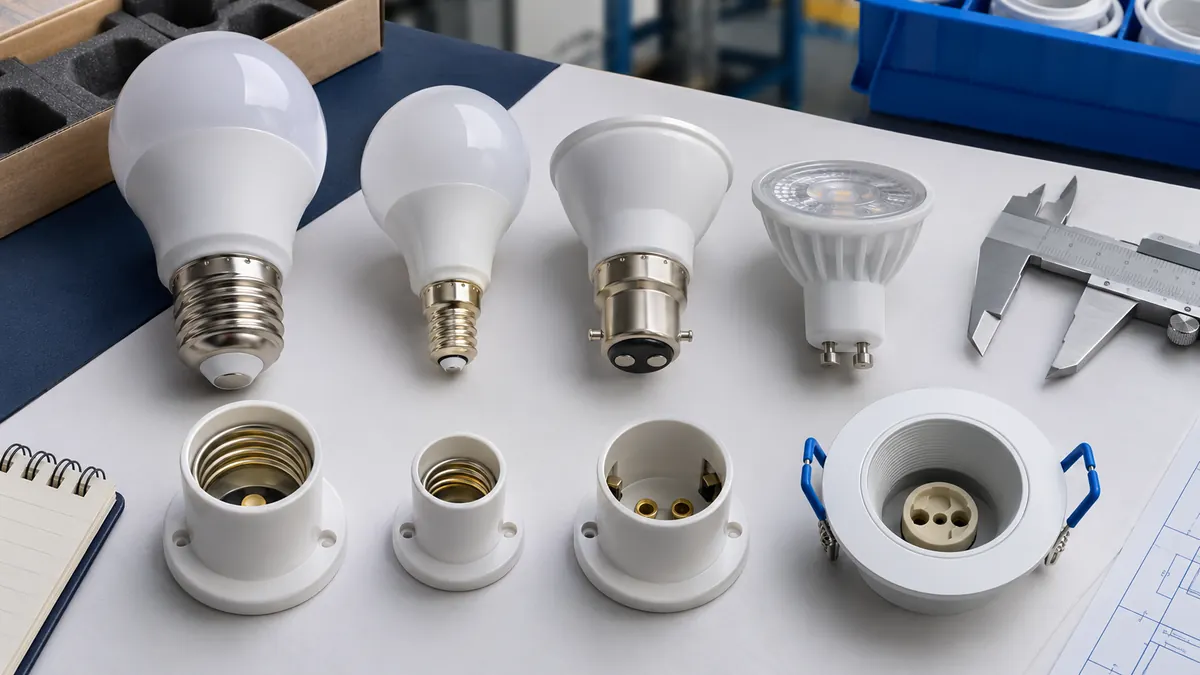
A bulb can have the right light output and still be unusable if its base does not fit the customer’s lampholder. Importers should identify the socket on the existing fixture, then confirm supply voltage and the physical space around the lamp.
Region-wide assumptions are risky because different fittings coexist in the same market. The final product label, package image and quotation should all identify the same base variant that the buyer has tested. A base error can make an otherwise suitable lamp unusable before its light quality is even considered.
Why the Lamp Base Must Be Confirmed First
The base controls the mechanical connection and often signals the intended electrical arrangement. Record the actual lampholder type and inspect it before choosing a replacement. A photograph may help shortlist a format, but a measured or physically checked sample settles the fit. Do not let a generic product-family title stand in for the exact base in the order specification.
Related buyer guide: Wholesale bulb checklist
E26 and E27 LED Bulbs
E26 and E27 are closely related Edison screw formats, but buyers should not assume every product or fitting is interchangeable. Specify the stated base and voltage of the offered variant and check the lamp holder. Confirm any local requirements for the destination market. If a supplier lists both options, ask which one the sample and quotation actually cover.
B22 Bayonet LED Bulbs
B22 uses a push-and-turn bayonet connection rather than Edison threads. Confirm pin arrangement and fit with the intended socket, as well as bulb diameter and height in the fixture. If a range includes both B22 and screw-base variants, keep their labels, cartons and SKU records distinct so a warehouse or retailer does not mix them.
Compare product options: Product categories
E14, GU10 and MR16
E14 is a smaller screw format often used in decorative fixtures. GU10 is a twist-lock spotlight base, while MR16 describes a reflector form commonly associated with two-pin configurations; the exact lamp and electrical supply must be checked. These are not simply alternate labels for one bulb. Include fixture dimensions and driver or transformer information where relevant.
Base and fitting check
| Compare | Buyer check |
|---|---|
| E26 or E27 | Specify the exact screw base shown on the chosen variant and test it in the holder. |
| B22 | Confirm the bayonet connection and physical clearance. |
| E14 or spotlight format | Check the smaller screw or the actual pin and electrical arrangement. |
Match the Base with Voltage and Application
Check the base together with the supply voltage, frequency and intended use. A product listing may offer the same bulb body in multiple electrical variants. Ask for the precise model code and rating label. For a hospitality replacement programme, add shade clearance and installation access; for retail, make sure the packaging clearly separates base options.
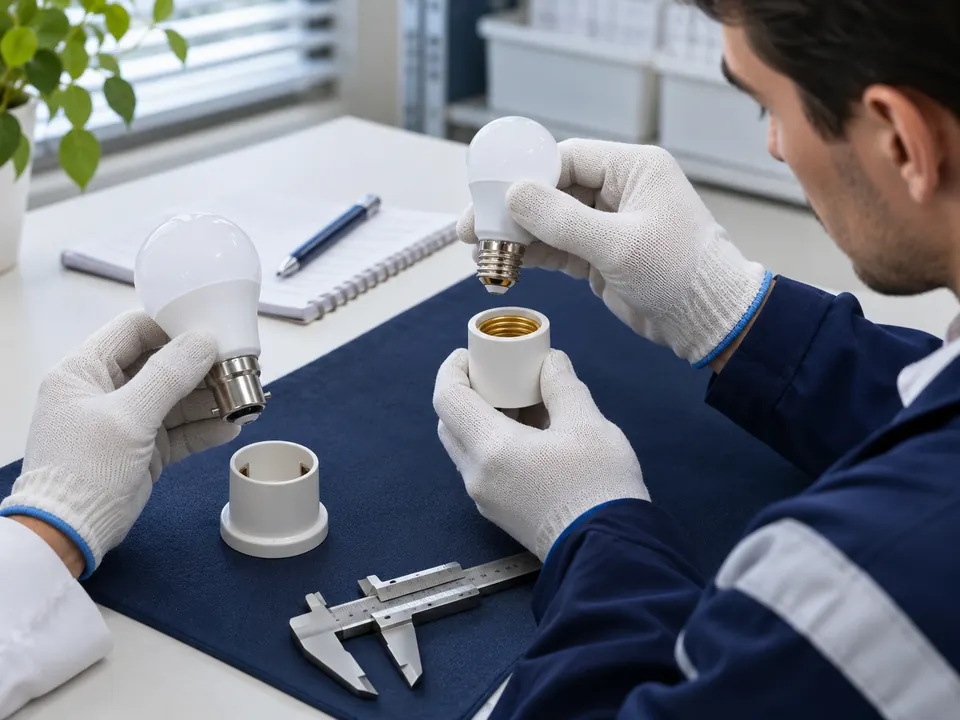
Check Physical Fit on a Sample
Insert the selected sample in the actual fitting, with power safely isolated as appropriate to the installation. Check insertion, stability, shade clearance and any obstruction caused by bulb shape. For spotlights and downlights, examine depth and driver space. Record the final fitting and base so a later variant substitution cannot be mistaken for the tested item.
Plan the market or application: Plan by market
Show the Correct Base on Labels and Packaging
The base name, product image, rating label and e-commerce listing should describe the same SKU. Avoid using one packaging artwork file across E26 and E27 or screw and bayonet versions without a clear variant marker. Approve the printed pack against the physical sample and quotation, then carry that distinction through carton labels and repeat-order records.
When your brief is ready: Send fitting details
FAQ
Frequently asked questions
Are E26 and E27 the same base?
No. They are similar screw formats, but specify and test the exact base required by the fitting and market. Do not rely on a broad regional assumption.Can a B22 bulb fit an Edison screw socket?
No. B22 uses a bayonet connection. Choose the matching lampholder or an approved installation solution rather than forcing a substitute bulb.Is MR16 a lamp base?
MR16 primarily describes a reflector size and shape. Confirm the actual pin configuration, electrical supply and fitting before ordering.What should a multi-market carton identify?
It should identify the exact base and electrical variant inside. Keep the printed labels, SKU and pack contents aligned for each market.RELATED RESOURCES
Continue your product review
Lumens vs Watts: How to Compare LED Bulb Brightness
Understand the difference between power and light output, compare lm/W fairly, and test perceived LED bulb brightness before a bulk order.Read articleWarm White vs Cool White: Choosing LED Colour Temperature
Use LED colour temperature, colour rendering and sample comparison to choose suitable white light for homes, hotels and retail spaces.Read articleLED Bulb Sample Approval Checklist Before Bulk Production
A complete sample sign-off guide covering identity, light, controls, dimensions, packaging, written specifications and change control.Read articleHAVE A PRODUCT IN MIND?
Discuss Your LED Bulb Requirements
Share your market, selected product, required functions, quantity and packaging needs so the exact configuration can be reviewed for a quotation.