
COMPANY NEWS · custom LED bulbs
What Can Be Customised in an OEM LED Bulb Order?
An OEM LED bulb order may use existing product variants for base, voltage, light and control functions, while logo, labels, box and manual are reviewed as a packaging programme. Changes to housing, electronics or control logic require technical assessment. Available options, sample cost, MOQ and timing depend on the selected product and order.Published August 30, 2026 · Updated November 14, 2026 · Shieldaily Editorial Team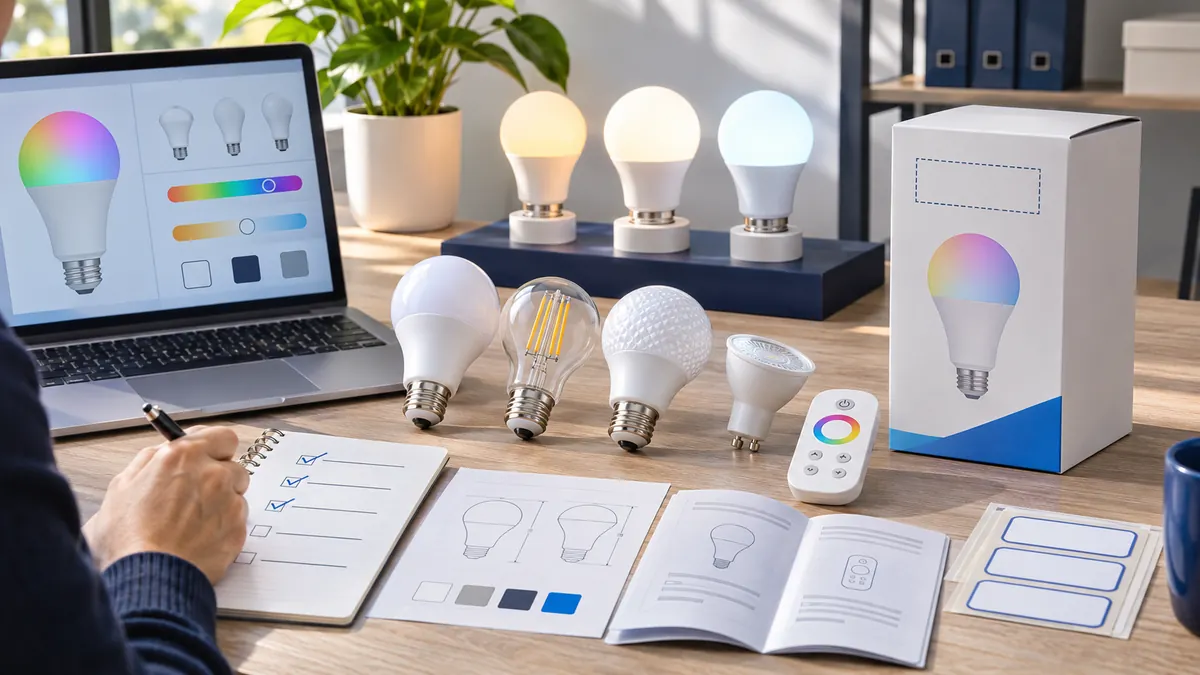
The word 'custom' covers very different levels of work. Choosing an existing E27 variant is not the same as requesting a new shell or remote-control scheme. A buyer should describe the target market and intended selling unit, then separate product, function and printed-material requests.
This allows Shieldaily to identify available options, estimate what needs development and propose a sample plan without making a blanket promise about every lamp in the catalogue. The quotation should separate standard choices from proposed development so the buyer can compare feasibility and cost.
Product Format
Start with a real bulb or downlight family and its intended use. Remote, RGB, emergency and smart products have different structures and controls. If a new shape or installation format is needed, provide drawings or a physical reference. A completely new housing may require tooling and a higher project threshold.
Explore customisation: OEM/ODM page
Voltage and Lamp Base
Specify the destination supply and actual socket or fitting. Existing variants may cover the required voltage, frequency or base, but this must be checked on the chosen model. Do not assume that a product picture or another SKU's label establishes the electrical version offered.
Wattage and Lumen Output
Define the useful light result before requesting a watt figure. Ask which outputs are available for the selected format and how they affect dimensions, driver and thermal behaviour. Compare candidates in the intended fitting. A requested value outside the existing range needs technical evaluation rather than an automatic confirmation.
CCT and CRI
Choose the white-light appearance and any colour-rendering requirement for the application. Fixed CCT, selectable settings and tunable white can need different control hardware. Confirm actual options on the offered bulb. A buyer should test the chosen appearance rather than approve a packaging claim from a generic range description.
Remote, Dimming, Smart and Emergency Functions
List the exact customer actions: pairing, brightness, group control, app setup, outage behaviour or backup runtime. These functions are not interchangeable and are not present on every product. A new control logic, driver or battery request may affect feasibility, testing and commercial terms.
Compare product options: Remote bulb range
Logo and Labels
Provide brand artwork, model naming, rating-label content, barcode and required language. Confirm where a logo can be applied on the chosen housing and which markings are required for the destination. Printed content must identify the actual electrical and control configuration, not a broad product family.
Colour Box and Instructions
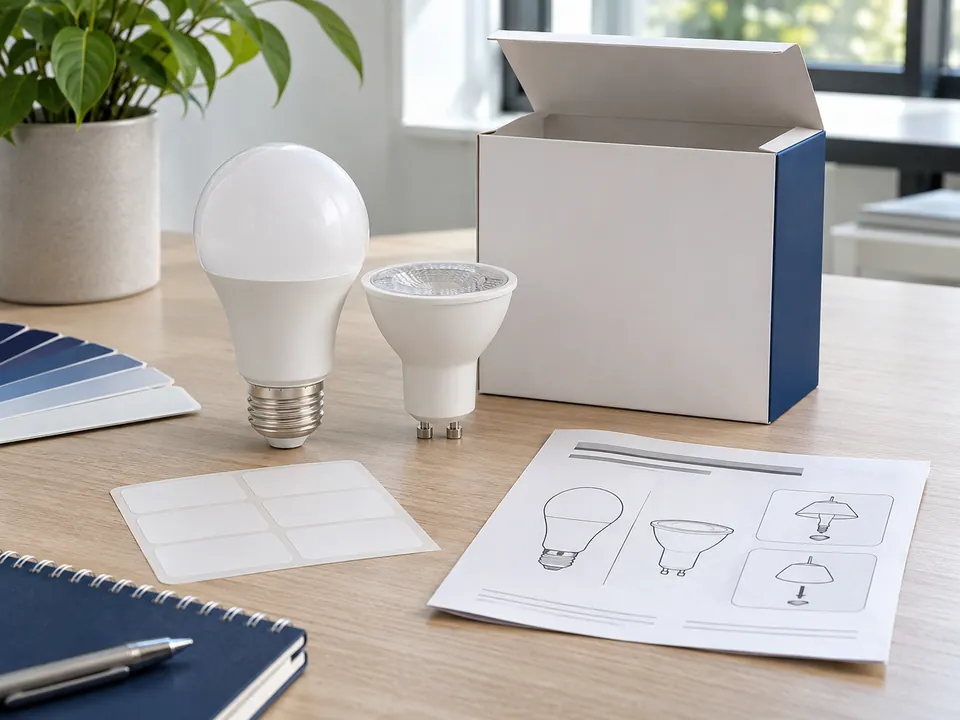
Define the selling unit first: bulb alone, bulb with remote, battery where agreed, driver or other accessories. Then prepare box and manual content around the tested sample. A QR code or app instruction should be verified before printing. Carton marks and quantity belong in the same pack specification.
Requirements That Need Development or Tooling
A new mold, component, driver, remote layout or unusual pack needs a technical review. Ask which existing solution is closest and what must change. The review may affect minimum quantity, sample cost and timing; none should be stated as a fixed promise before the scope is known.
MOQ, Sample Cost and Lead-Time Factors
Commercial terms depend on product availability, requested modifications, artwork, tooling and order volume. State an estimated quantity and target delivery window so the quotation can explain trade-offs. Do not infer MOQ from carton quantity or assume samples and molds are free.
Related buyer guide: Sample process
Final Confirmation
Approve the actual model, controls, sample, pack contents, artwork and written specification before bulk production. Record any change after approval as a revision that may need retesting. This turns an OEM idea into an order that can be inspected and repeated.
FAQ
Frequently asked questions
Can every LED bulb be changed in the same way?
No. Available options depend on the selected product structure, control system and order. A new design needs technical review.Does private label mean only adding a logo?
No. It can include labels, box, manual and carton, but the scope and feasibility must be confirmed for the chosen selling unit.Can an OEM order request a new remote function?
It can be evaluated. Describe the required behaviour and controller, then review feasibility and sample testing before quoting.What affects a custom project's minimum order?
Product availability, tooling, component changes, artwork and pack scope can affect it. Confirm the terms for the actual project rather than assuming a universal MOQ.RELATED RESOURCES
Continue your product review
How Retail and E-commerce Are Changing LED Bulb Packaging
Compare protection, single and multi-packs, control instructions, barcodes, languages and shipping needs for retail and online LED bulb sales.Read articleHow Private-Label LED Bulb Packaging Is Prepared
Define brand files, product labels, barcode, box, manual, carton and exact selling-unit contents before approving private-label packaging.Read articleWhat Happens After an LED Bulb Order Is Delivered?
Check cartons, variants, pack contents and a sample of functions against the approved order, then document discrepancies.Read articleHAVE A PRODUCT IN MIND?
Send Your Product and Order Brief
Share the selected product, required functions, quantity and packaging scope so the next sample or quotation step can be discussed.